Fast forward to July 21st, 2026 when I had a stressful couple of days interviewing for a new job and I went back to the Stafford Civil War Park by myself to clear my head. Upon approaching Accokeek Creek this time I smelled a much stronger foul odor and the water was a very cloudy gray color. My stomach immediately sank and I knew something wasn't right. A big thunderstorm began to aggressively approach and I got back to my car right before the all out downpour began.
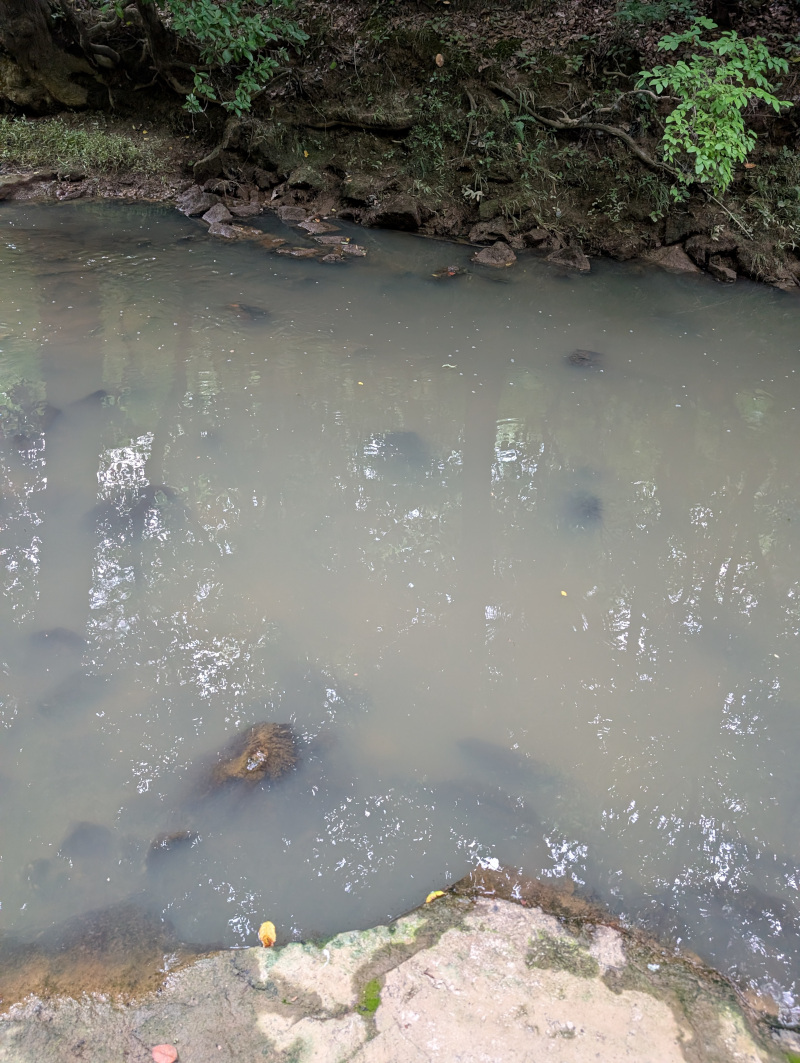
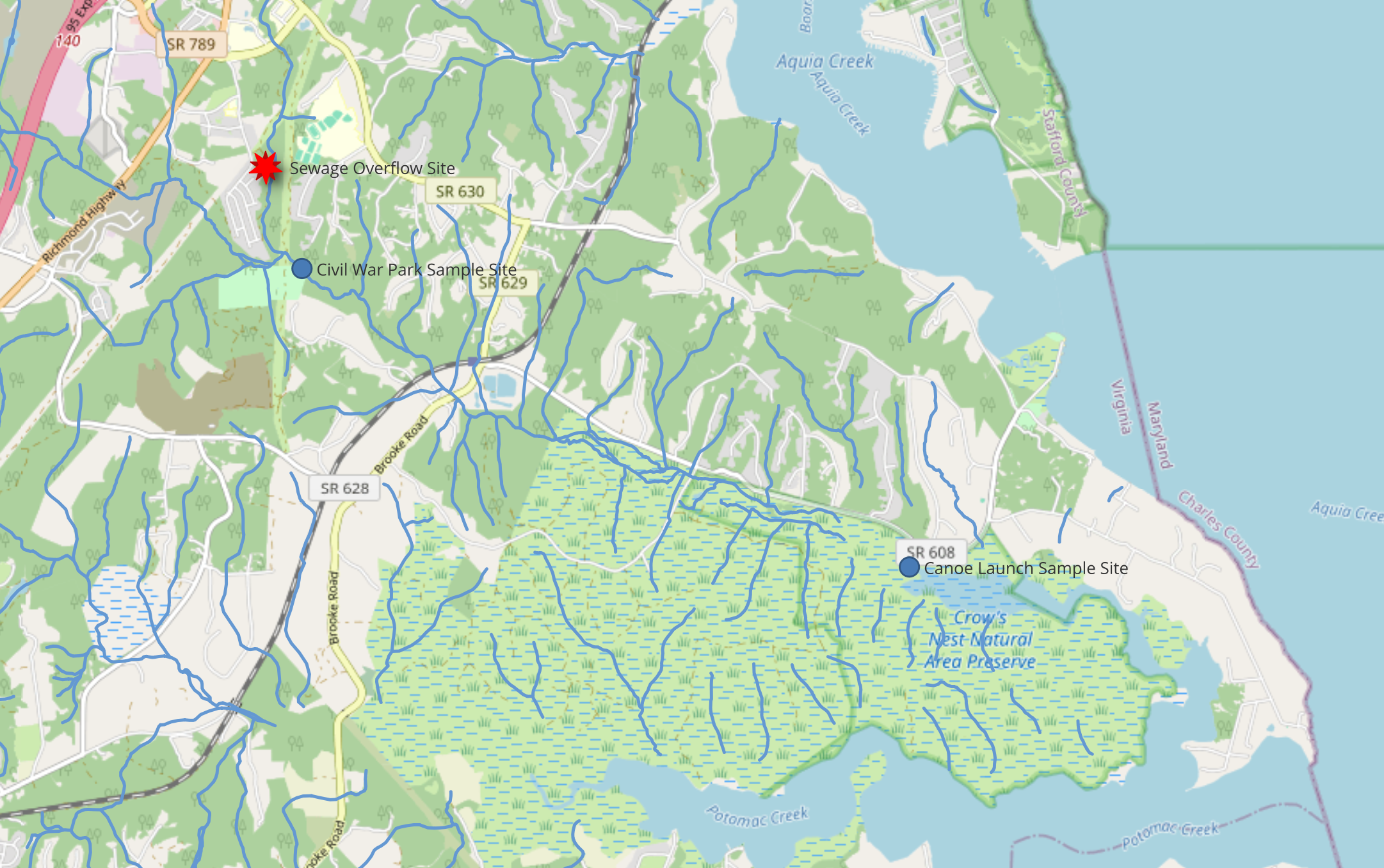
The next day, I decided I needed to investigate this further. After pulling up various maps, I was shocked to find that there was a sewer pump station just upstream from where I noticed the stinky gray water. I found it hard to believe that this was just a coincidence.
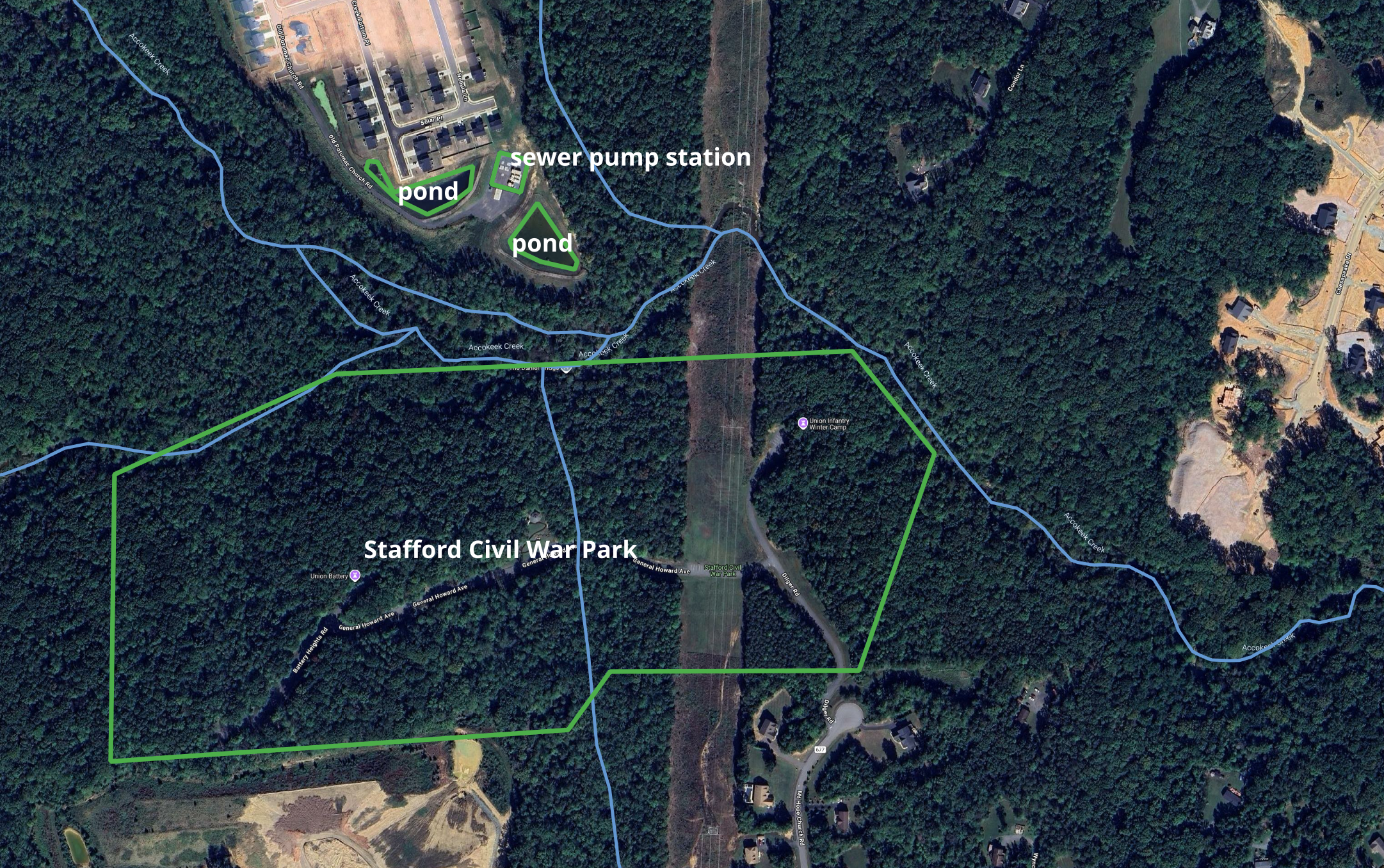
I immediately notified Stafford County Utilities who requested that I send in the photos, which I did. Due to the fact that the area bordered the Falmouth and Aquia districts, I also notified Supervisor Evans and Vice-Chairwoman Guy. Supervisor Evans responded immediately and took me very seriously. I told her I was going to go out and investigate and try to find the source. I also immediately called up Sarah Balon, who serves as the Water Quality Monitoring Lead at Waterway Cleanups. She agreed to meet me at the Stafford Civil War Park immediately. I went home to grab a cooler bag, some ice packs, and a couple R-Cards for testing for e-coli and coliform bacteria. Upon arriving I noticed a Stafford County van in the parking lot and we saw two staff members in the woods. They seemed to avoid us and we were not able to talk to them.
I immediately took a sample of the water, applied it to the R-Card, let it set, and put it back into the cooler bag in a clean ziploc baggy. This sample would eventually clock in at 700 colony-forming units (CFU)/100 ml of E. Coli, which is almost three times the acceptable Total Maximum Daily Load (TMDL) of 235 CFU/100 ml[1]. The water appeared to look slightly better visually but the smell was clearly still there. From there, the plan was to systematically check various points upstream to attempt to locate the source. Shortly after taking the sample, I got an email from Stafford County Department of Utilities.
Good afternoon Jesse,Thank you for reporting your concerns. Staff from Field Operations and our Environmental team both went to the site. They saw (and smelled) no evidence of a sewage spill. We did take a coliform sample but it will take several days to get the results back from the lab. We have sampled in the area before and have a good idea of what the baseline is for the creek, so if there is an issue we will be able to tell.Best,Jon C. Brindle
This was disappointing as the smell was certainly obvious. Sarah and I pushed on. We slowly worked our way upstream and checked 3 more sites before the smell was gone. We then noticed a fork in the creek with 2 parallel channels. We checked a site on both channels and they smell was not there as well. After looking further at a map, we noticed a feeder stream that ran in parallel to the side of the sewer facility (North to South) and fed into the creek. We doubled back to locate where it joined up with the main creek and low and behold, there was the smell! We decided to hop back into the car and drive to the neighborhood just above the sewer facility to see if we could continue our search for the source.
We parked in the neighborhood as close as we could to the creek and we bushwacked into 2 more sites along the creek. The smell was overwhelming. We knew we were getting closer. We also started noticing a lot of sewer warning signs and manhole access covers. We were clearly along a main sewer line. We couldn't figure out the next place to check that wasn't going to be too difficult to bushwack through but we were able to find an access road. Thankfully I was in my Jeep Gladiator and we decided as our final attempt before I had to return home that we would drive in as far as we could and then walk in the rest of the way. I'm glad we did because as we walked along the access road, after searching for several hours, we had stumbled upon a horrific scene.
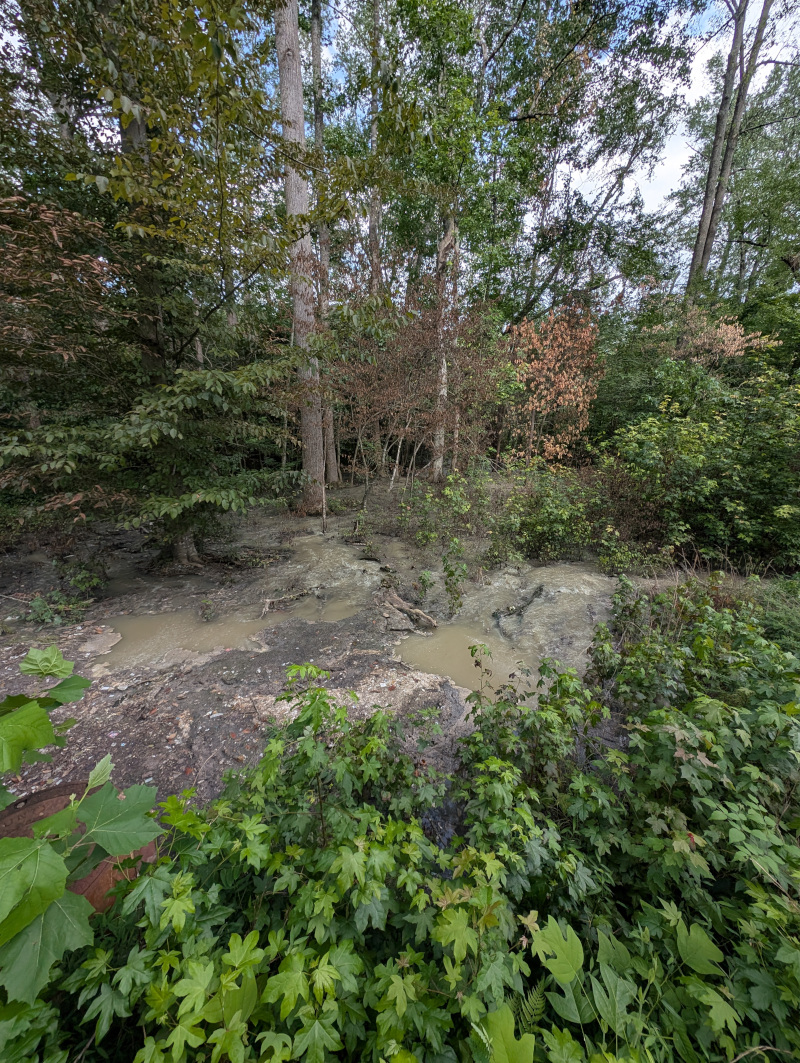
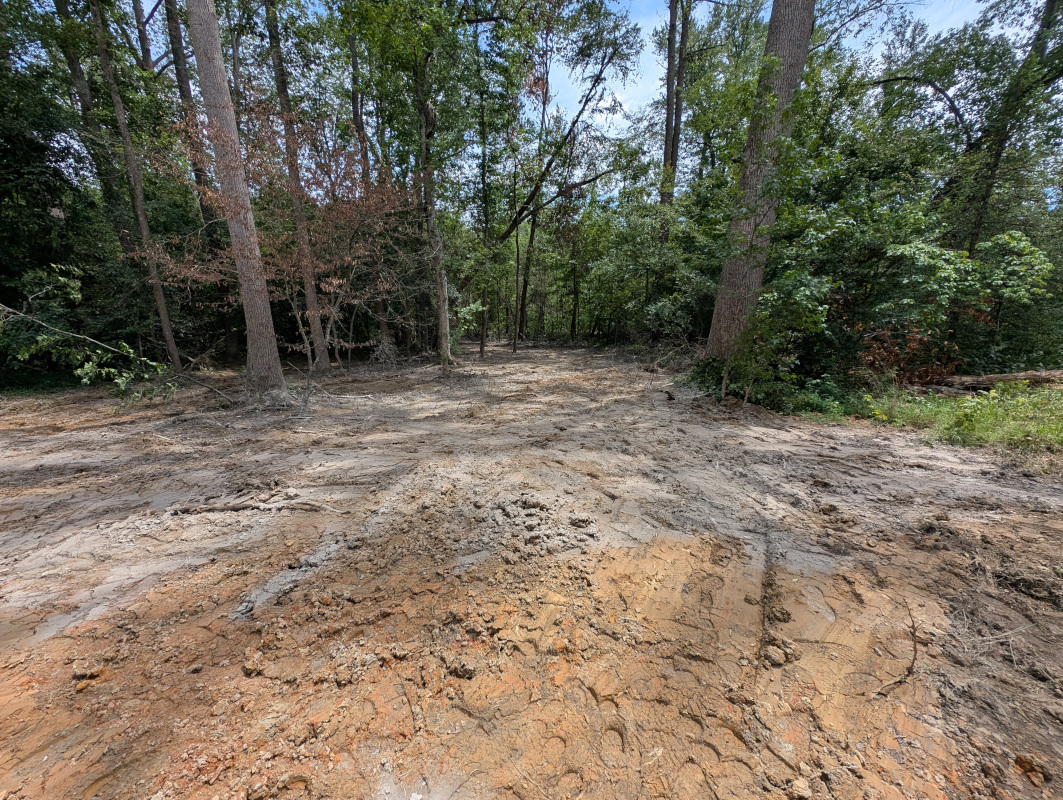
I immediately called Supervisor Evans and told her that we had found it. I sent the exact GPS coordinates and photos/video of the sewage leaking out of the sewer main to her and the Department of Utilities contact that previously told me they didn't find anything. After taking several more photos we decided to call it for the day and start walking back to the car. That is when things got even worse. What was just a trickle of sewage turned into a complete flooding out of the pipe. The pump had clearly kicked on and sent a massive, fresh batch of sewage down the side of the hill and back into the creek. This flowed for minutes and continued flowing when we finally had left.
A repair crew was dispatched and they were easily able to find the source that we reported. I was told that they worked through the night and into the morning to repair a 18" crack that was in the pipe. That same next morning I decided to take a water sample at our usual sample site at the Crow's Nest Canoe Launch, which is a bit downstream from the Civil War Park. While this sample showed typical amounts of coliform bacteria, no E. Coli was detected. How is this anything short of a miracle? Well, this is one of the multitude of reasons that wetlands are so critically important to leave in place and protect. The wetlands successfully had filtered out the harmful bacteria that could have posed significant health risks to residents that recreate in lower Accokeek Creek every day[2][3][4].
This is why so many Stafford County residents are so angry and resistant to all of the irresponsible industrial scale development occurring within Stafford County. Our beautiful county is home to a large swath of biodiverse lands including both tidal and non-tidal wetlands, swamps, marshes, creeks, and streams. We are one of the many critical buffers protecting the entire Chesapeake Bay Watershed. When data center developments like Stafford Technology Campus (STC) are allowed to clearcut almost 500 acres of mature growth forest, significantly disturb the hydrology of the land with grading and "Best Management Practices" or BMPs, install large areas of impervious surfaces such as buildings and concrete, and bulldoze over 2.2 acres of wetlands and 4,733 linear feet of stream channel[5], it is certainly not acceptable. While this may not sound like a lot to some of you, when it happens dozens of times, it adds up to large scale reduction of the very ecosystem that prevents our wells from running dry and acts as the filters of chemicals, bad bacteria, and a plethora of other pollutants.
References
- https://www.pwcs.edu/userfiles/servers/server_340140/file/risk-safety-environmental/stormwater-management/tributaries-of-the-potomac-bacteria-tmdl-action-plan.pdf ↩
- https://www.sciencedirect.com/science/article/abs/pii/S0378377410002209 ↩
- https://pmc.ncbi.nlm.nih.gov/articles/PMC6800712/ ↩
- https://rangelands.ucdavis.edu/water/vegetative-buffers-and-wetland-filters ↩
- https://www.nao.usace.army.mil/Media/Public-Notices/Article/4401717/nao-2022-02671-stafford-technology-center-stafford-virginia/ ↩