The core premise of mitigation banking is that destroying a natural wetland in one location can be perfectly offset by creating, enhancing, or preserving a wetland somewhere else. An analogy I often like to use is about our local libraries where adults and children are able to read books and learn new things. If I go into the local library in Stafford County and burn or otherwise destroy 200 children's books, it would be legally allowed as long as I pay to buy 200 children's books at the local library in Culpeper, Virginia. We had "no net loss" of children's books in Virginia. Unfortunately, the kids who relied on those books in Stafford are negatively impacted by the loss of the benefits those books provided to them.
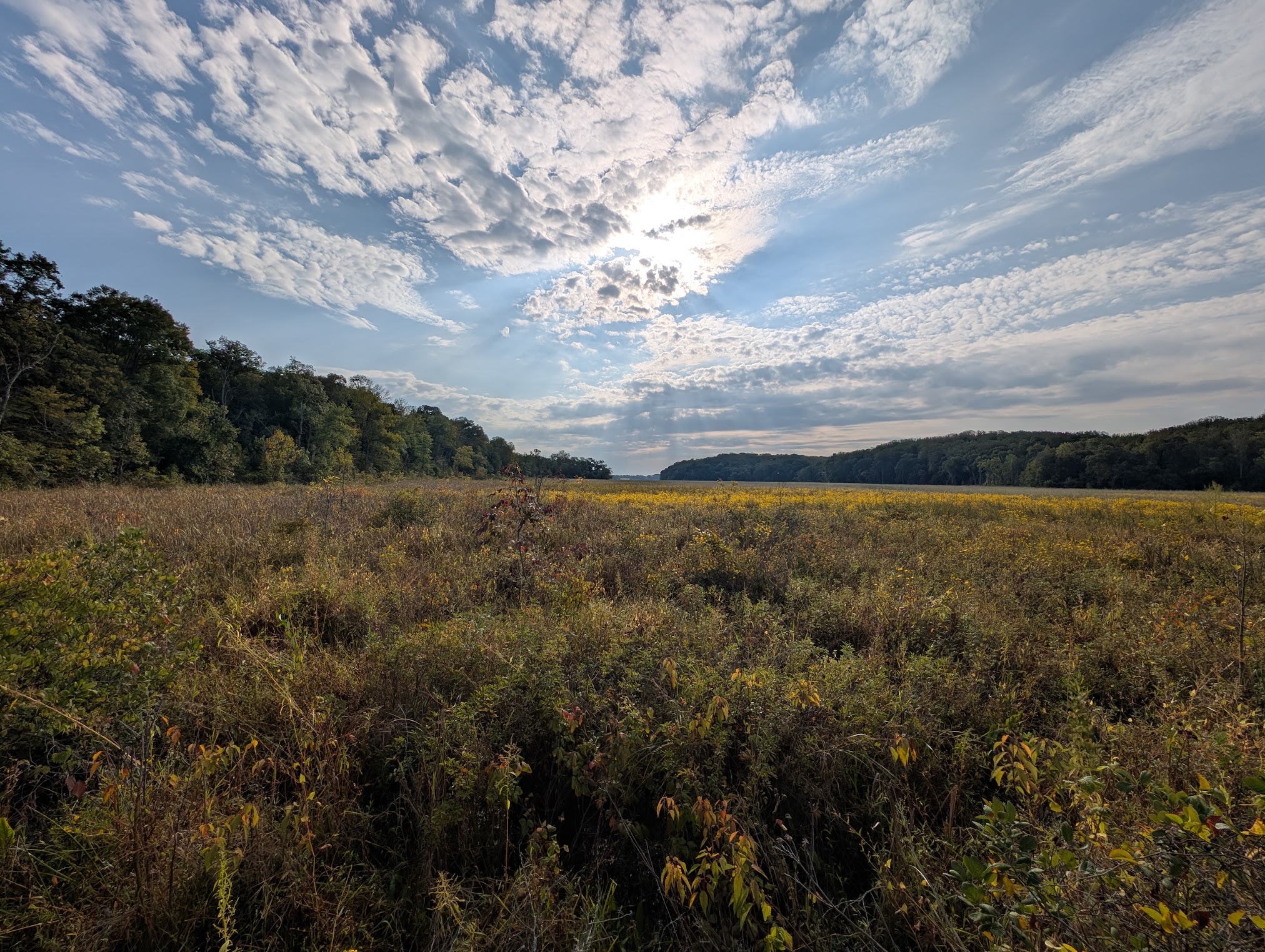
The Benefits of Wetlands
Wetlands are critically important to all life, including humans and wildlife alike. They provide several benefits in support of our rich biodiversity and the continuity of life.
Climate Resiliency
Wetland plants and the specific soils found in wetlands act as powerful carbon sinks which lock away carbon dioxide instead of releasing it into the atmosphere to warm the planet. They also soak up heavy rainfall and snow melt, holding and releasing water slowly to prevent severe downstream flooding. The slower release of water helps with the necessary ground recharge for the aquifers that are critical in providing groundwater to ensure our wells don't run dry. Plant roots stabilize shorelines, riverbanks, and coastlines which absorbs wave energy and prevents erosion. This has been found to save coastal communities billions of dollars in damages each year.[3]
Water Quality
Plants and microscopic organisms trap sediments, absorb harmful chemicals, and break down excess nutrients before the water reaches lakes or oceans. This includes harmful bacteria, such as E. coli, that can make humans that recreate in waterways very sick. This is incredibly important as most Northern Virginia waterways all eventually lead into the Chesapeake Bay. Wetlands also store water during wet periods and slowly release it during dry spells, helping to sustain surface water flow and prevent severe droughts.
Wildlife Habitat and Biodiversity
While covering a small fraction of the earth, wetlands are home to roughly 40% of the world's plant and animal species. They serve as safe, nutrient-rich breeding and feeding grounds for a huge variety of fish, shellfish, amphibians, and insects. Waterfowl and shorebirds also rely heavily on wetlands for resting, feeding, and nesting during long seasonal migrations. It can't be more clear: less wetlands means less wildlife; no wetlands means no wildlife.
The Fallacies of Wetland Credits
The Fallacy of Equivalence
Destroying a natural wetland in one location can be perfectly offset by creating, enhancing, or preserving a wetland somewhere else.
This treats highly complex, centuries-old ecosystems as interchangeable commodities. A data center developer was permitted to destroy a 10-acre wetland in an urban area that provided localized flood control, water filtration, and community heat-island reduction. They were permitted to do so by purchasing credits that fund a rural wetland 50 miles away. This does not replace those lost ecosystem services for the affected local community that lost its wetland or its wildlife.
The Fallacy of "No Net Loss"
In reality, this frequently results in an actual net loss of functional ecology. Man-made or restored wetlands often fail to replicate the biodiversity, soil chemistry, and complex hydrological functions of the original, naturally occurring wetlands. Systems that award compensatory mitigation for preservation logically result in a net geographic loss of wetland acreage when a developer destroys a different one.[4]
The Temporal Fallacy
There is a severe timeline gap, known as temporal loss. A developer might pave over a mature, fully functioning wetland today, while the "banked" wetland funded by their purchased credits may take decades to mature and reach the same level of ecological productivity. This is only if it ever actually does. A study published in PLOS Biology looking at restored wetlands globally revealed that even after 50 to 100 years, restored or constructed wetlands recovered biological structure and biogeochemical functions (like carbon and nitrogen storage) at rates 23% to 26% lower than reference natural wetlands.[5]
The False Choice Dilemma
This is a false dilemma. Compensatory mitigation bypasses a critical third option: designing infrastructure to conform to and protect existing ecosystems rather than treating destruction as a forgone conclusion that can simply be paid away. Under environmental law, developers are supposed to follow a strict hierarchy: avoid wetland destruction first, minimize damage second, and mitigate (use credits) only as a last resort. The availability of mitigation credits creates a financial loophole. Instead of redesigning a project to protect an existing ecosystem, developers treat mitigation credits as simply a cost of doing business, making destruction too easy to greenlight. In a 2009 study by the Environmental Protection Agency (EPA), they found that avoidance and minimization have received far less policy attention, and this lack of policy development represents a missed opportunity to implement effective wetland conservation.[6]
Conclusion
Compensatory mitigation, including Wetland credits, are insufficient in ensuring the long term sustainability of human life and wildlife biodiversity. Protecting and safeguarding our wetlands should be a hard requirement and not a mere afterthought or soft goal of environmental policy. Mechanisms such as LEED Certification should become the norm instead of an occasional outlier. I urge you all to reach out to your state and local representatives and demand that we do better.
References
- https://law.lis.virginia.gov/admincode/title9/agency25/chapter210/section116/ ↩
- https://www.epa.gov/cwa-404/compensatory-mitigation-losses-aquatic-resources-under-cwa-section-404-final-rule ↩
- Costanza, R., Pérez-Maqueo, O., Martinez, M. L., Sutton, P., Anderson, S. J., & Mulder, K. (2008). The value of coastal wetlands for hurricane protection. Ambio, 37(4), 241–248. https://doi.org/10.1579/0044-7447(2008)37[241:tvocwf]2.0.co;2 ↩
- Turner, R.E., A.M. Redmond, J.B. Zedler. 2001. “Count It By Acre of Function— Mitigation Adds Up to Net Loss of Wetlands.” National Wetlands Newsletter 23(6). ↩
- Moreno-Mateos, D., Power, M. E., Comín, F. A., & Yockteng, R. (2012). Structural and functional loss in restored wetland ecosystems. PLOS Biology, 10(1), Article e1001247. https://doi.org/10.1371/journal.pbio.1001247 ↩
- Hough, Palmer and Robertson, Morgan, "Mitigation under Section 404 of the Clean Water Act: where it comes from, what it means" (2009). U.S. Environmental Protection Agency Papers. 269. https://digitalcommons.unl.edu/usepapapers/269 ↩