I have only flown on a plane twice in my life. The first time I was five years old and my family was on our way to Disney World. I only remember three things about the trip: my mom buying me a bracelet after I cried on Space Mountain, the Mickey Mouse shaped pancakes our hotel had, and the pilot of the plane pinning a pair of wings onto my t-shirt. I do not remember boarding the plane, hearing It’s a Small World After All and meeting Mickey Mouse, or eating a single meal other than breakfast; although, I am sure I have done all of these things.
The second time I’ve flown in a plane was this summer at age 24. Having no memory of being on a plane before, you can imagine my anxiety as I shuffled on and took my seat. They say talking about your problems is the best way to work through them, so I started making small conversation with the gentleman next to me. I told him all about my life in Virginia, what I majored in in college (Environmental Science), what I do in my spare time (volunteer), and what my research focused on (the water quality of streams affected by data center construction). In return, he told me about his life in Michigan, his children, his wife, how green the forest is, how environmentally conscious his neighbors are, and asked why I am heading up that way. I am meeting my friend Karen, who has recently spent time traveling the country, and we are seeing the Great Lakes together. He said he should’ve guessed that and added, “You seem to really like water, I’m assuming you like rocks too?” He then dove into stories about searching for yooperlite, a fluorescent rock, and told me I have to fit rock hunting into my vacation plans.
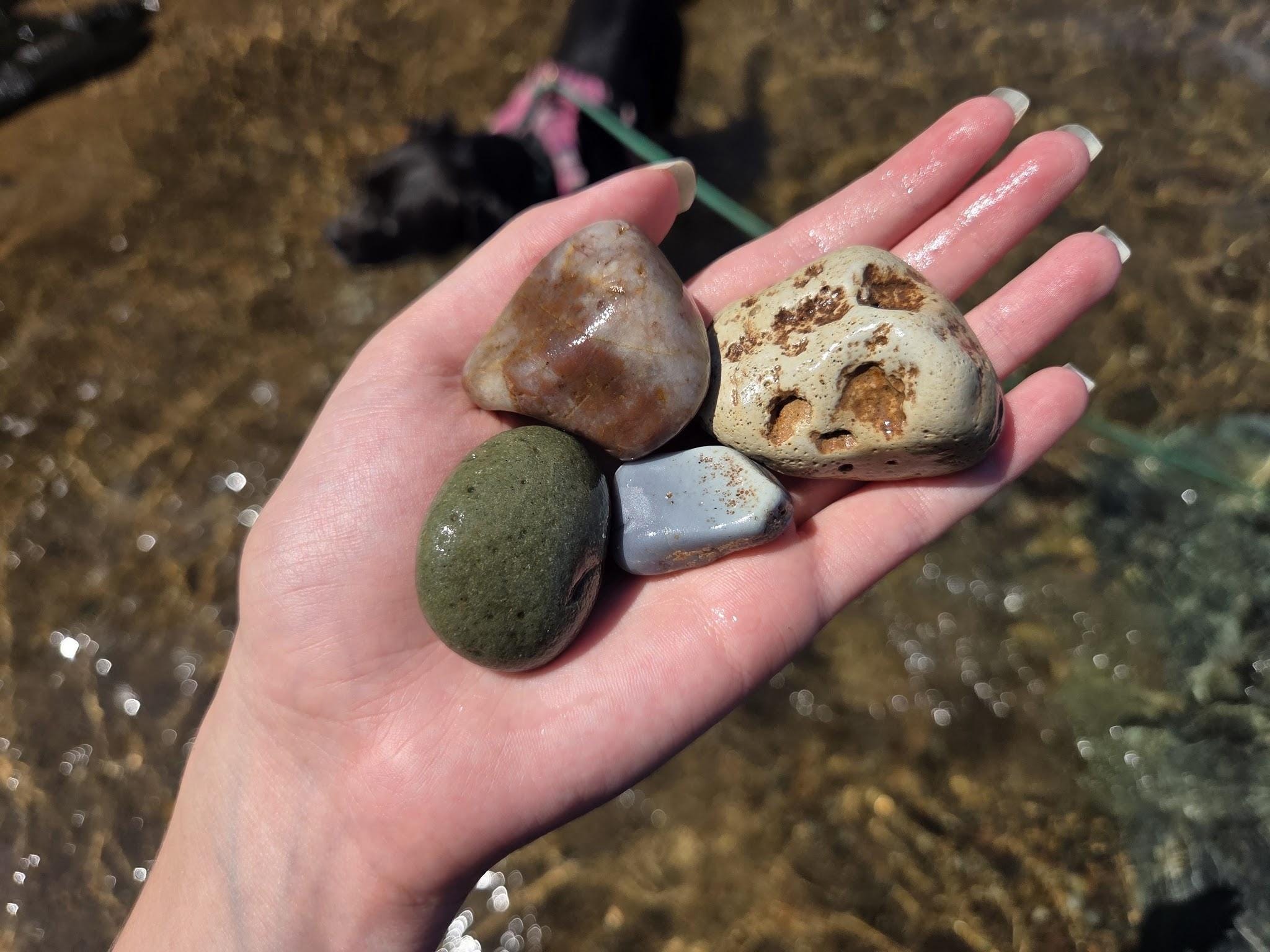
When the plane landed, the first thing Karen and I did was go look for rocks. With my luggage in the back of her Subaru, she drives me to a beautiful beach off the shore of Lake Superior. I remember the blue shoreline, the lighthouse, the chill breeze, which was much colder than the humid climate I recently departed from, and rocks like I have never seen before. We started with our pants rolled up, but soon stopped caring as we scoured in knee deep water. It felt as if I was browsing through shelves of a crystal shop—each stone a different luster, each rock a different hue. Their complexions weren’t the only thing making these rocks novel to me. In the field it has become habitual to pick up a rock, inspect it, then hover it in the water with a little shimmy-shake to remove any debris, but many of the rocks I was picking up in Superior had an orange, metallic coating that would not leave no matter how many times it was waved. After sharing this observation with Karen, I learned that the Upper Peninsula of Michigan has a deep history with the mining of iron ore. This residue followed us like a shadow as we made our way through the Great Lakes, for with every cherished memory an environmental concern bled through.
While traveling down the coast of Michigan, Karen and I made a game out of tallying the number of bigfoot statues, lighthouses, and ice cream shops, three things that Michigan is unashamedly joyful about. I do not remember how many we counted. I do remember stopping at every other scenic viewpoint overlooking Lake Michigan and Lake Huron, getting out of the car, and looking for rocks. These rocks were different from Lake Superior’s; in place of bold shades, they looked watercolored, with many pastel purples and reds. With that said the water was the brightest I have ever witnessed. It gave me a feeling of warmth, like I was lucky to be there. I joked that if I didn’t study water quality, I would’ve taken a swig. Karen later informed me that the water is unnaturally clear due to an invasive mussel that has wiped out all of the phytoplankton at the bottom of the food chain.
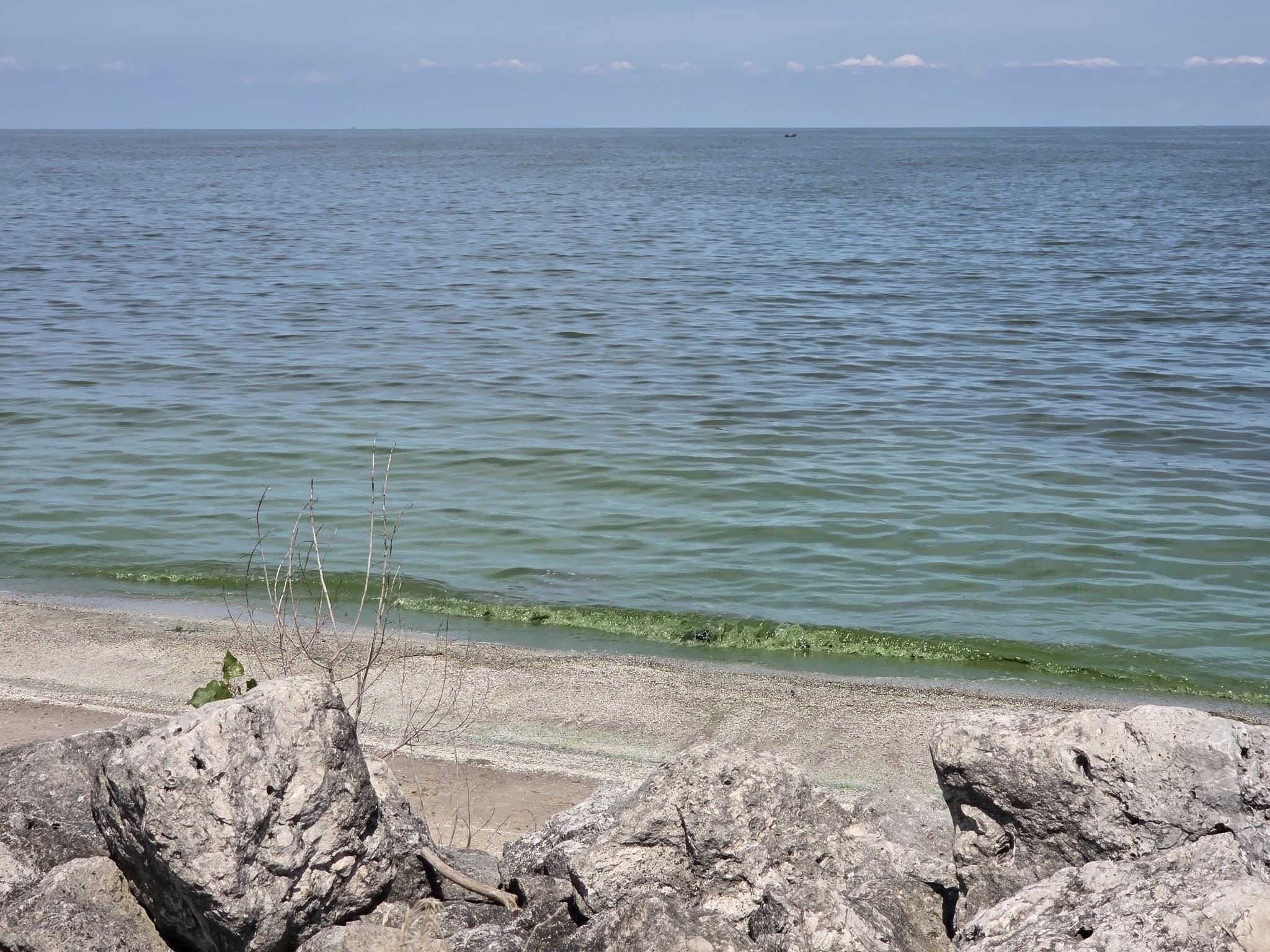
When we made it to Lake Erie, we saw the opposite problem. The water was green as grass. I remember visiting the many wetlands that feed into Erie, sifting through miles of shells and fish bones on the shore while making sure not to step foot in the lake, Karen panic washing possible bacteria ridden sand off of her dog’s paws, and I remember passing by a large billboard on the freeway that pictured a cow and cup full of green water with the words: “Save Lake Erie, Ban Factory Farming.”
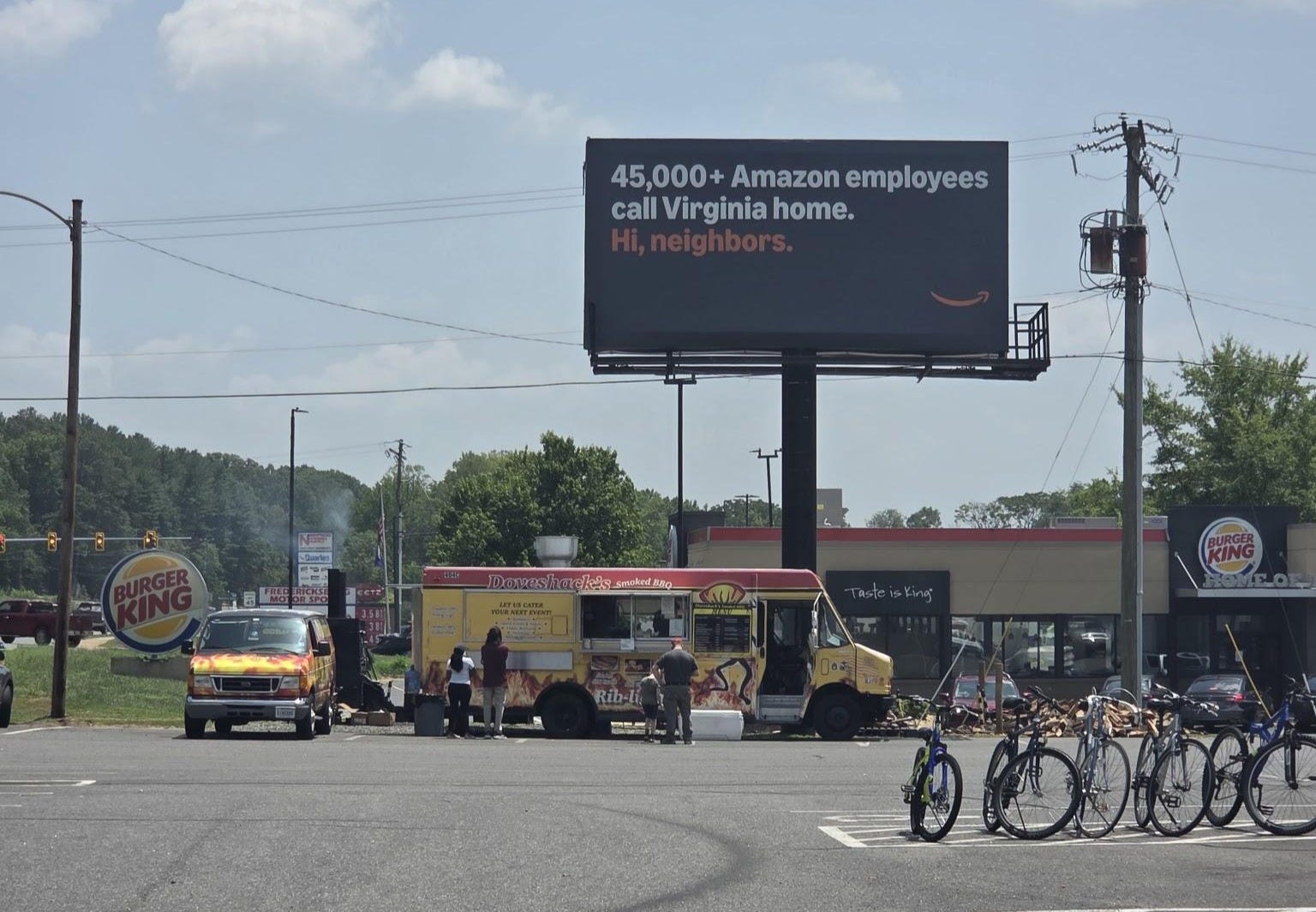
My home in Virginia paints a different landscape. We do not have heartfelt billboards saying “Save the Lake.” In their place we have boastful retorts, “45,000+ Amazon employees call Virginia home. Hi, neighbors,” and blatant lies, “Many VA data centers use no water 96% of the time. Many don’t use water at all.” Last week Stafford County’s Board of Supervisors accepted the Accokeek Center, a data center placed right off of Accokeek Creek and on November 18th the Kings Highway Assemblage—three data centers (48 buildings), along with 14 substations—is being heard by the Planning Commission. This massive proposal is on 1,500 acres of what is now farmland, a portion of which is forested, and two of the centers, Sisson South and Simms Farm, border the Rappahannock River. It makes me wonder, is this what we want to be remembered for? Virginia is notoriously recognized as the Data Center Capital of the World; does Stafford want to be known as the county that sited all of its data centers on the coast of invaluable waterways? Would it make us proud to have the most Amazon workers, the most data center employees? Sisson South is proffering a trail that would provide the public access to the Rappahannock river. When people from out of state visit our county, do you think they will remember the view more or the walk past the thirteen 75-foot-tall data center buildings on their way down?